Is Crowsworn a Hollow Knight Clone? Analyzing the Metroidvania Comparison
Explore the reality behind the Crowsworn and Hollow Knight comparisons. Learn how Mongoose Rodeo builds a unique experience through gothic combat and the cursed kingdom of Fearanndal.
Published: Crowsworn Wiki Editorial Team
Table of Contents
Understanding the Crowsworn and Hollow Knight Comparison
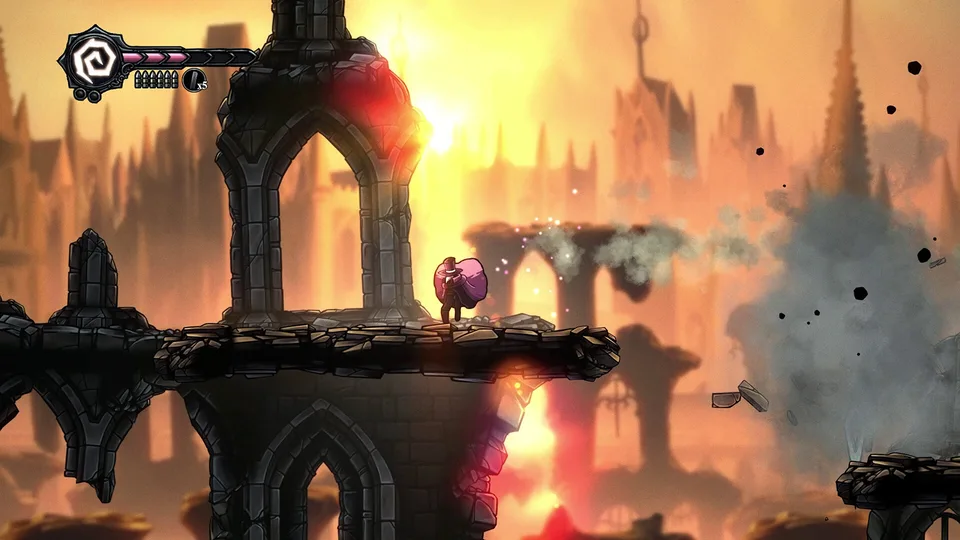
The comparison between Crowsworn and Hollow Knight is one of the most frequent topics within the metroidvania community. At a glance, the visual language—hand-drawn 2D art, a mysterious protagonist, and a ruined, atmospheric world—naturally reminds players of the journey through Hallownest. However, labeling Crowsworn simply as a "clone" overlooks the distinct mechanical and thematic foundation being built by developer Mongoose Rodeo.
While both games occupy the same genre space, they prioritize different player experiences. Hollow Knight is often praised for its melancholic, insect-like world and precise, minimalist combat. In contrast, Crowsworn leans into a "hunter" fantasy, set in the cursed kingdom of Fearanndal. The game aims to blend the exploration-heavy structure of a classic metroidvania with the aggressive, high-pressure combat systems found in titles like Bloodborne and the stylish mobility of Devil May Cry.
How Combat Philosophy Defines the Experience
One of the primary reasons Crowsworn moves beyond the Hollow Knight comparison is its combat system. In many metroidvanias, combat serves as a gatekeeper to exploration. Crowsworn, however, treats combat as a form of expression. By incorporating a Scythe for melee, Pistols for ranged pressure, and Corvian Magic for supernatural flair, the game encourages players to stay on the offensive.
Combat Arsenal
The Scythe: Serves as the primary close-range weapon, offering weight and distinct attack arcs that differ significantly from a standard nail.
Pistols: Provide the ability to maintain combat pressure from a distance, allowing for a more varied rhythm than purely melee-focused titles.
Corvian Magic: Adds a layer of supernatural utility, enabling players to chain abilities and maintain flow during intense boss encounters.
According to community discussions, players appreciate that these tools are not just for survival but are designed to make the protagonist feel dangerous. This "hunter" mentality is central to the game's identity, separating it from the more defensive, reactive playstyle often required in other genre staples.
The World of Fearanndal vs. Hallownest
The setting of Crowsworn, known as Fearanndal, is a kingdom defined by its curse and the near-total disappearance of humanity. While it shares the "ruined kingdom" trope common to the genre, the aesthetic and lore are distinct. Where Hallownest feels ancient, delicate, and melancholic, Fearanndal presents a sharper, more gothic, and aggressive visual profile.
The protagonist’s design—featuring a plague-doctor-inspired mask, a long cloak, and a red-caped silhouette—creates a different energy. Players have noted that while Hollow Knight’s protagonist feels like a silent observer navigating a fallen empire, Crowsworn’s hunter feels like a catalyst or a curse moving through a world that is actively resisting them. This shift in protagonist energy fundamentally changes how players perceive the environment and their role within the story.
Why Genre Tropes Are Not Clones
It is important to remember that interconnected maps, ability gating, and backtracking are core pillars of the metroidvania genre, predating Hollow Knight by decades. When developers use these mechanics, they are working within a established tradition rather than copying a specific title.
Tip
When evaluating Crowsworn, look at how its systems interact. A successful metroidvania uses its combat to enhance exploration. If the movement feels crisp and the Scythe attacks provide meaningful feedback, the game succeeds in its own right, regardless of whether it shares superficial similarities with other titles.
The "clone" label often acts as a double-edged sword. While it helps players quickly understand the type of game they are looking at, it can also set unrealistic expectations. Crowsworn is currently being developed with a focus on its own unique mythos and combat rhythm. The true test for the game will be how well it integrates these various influences into a cohesive experience that stands firmly on its own.
Community Perspectives on Metroidvania Evolution
The broader metroidvania community has been vocal about the "post-Silksong" landscape. With high expectations for any hand-drawn 2D game, players are looking closer than ever at movement, boss design, and the reward loop of exploration.
Positive Reception: Many fans are excited about the aggressive combat, viewing it as a refreshing evolution of the genre.
Constructive Criticism: Some community members emphasize that the game must prove its map design and boss encounters are as memorable as its combat aesthetic to truly distinguish itself.
Ultimately, Crowsworn is carving out a niche for players who enjoy the exploration of a metroidvania but crave the combat intensity of action-oriented titles. For those interested in tracking the game’s progress, the official Steam page (Crowsworn on Steam) remains the primary source for the most up-to-date information regarding development milestones and eventual release details.
Frequently Asked Questions
Does Crowsworn play exactly like Hollow Knight?
While it shares the metroidvania structure, the combat rhythm is significantly different. Crowsworn focuses on aggressive, stylish combat involving multiple weapons, whereas Hollow Knight is known for precision and rhythmic melee.
What are the main inspirations for Crowsworn's combat?
The developers have explicitly cited Bloodborne for its gothic hunter atmosphere and Devil May Cry for the speed and flow of its combat mechanics.
Is the world of Fearanndal similar to Hallownest?
Both are ruined kingdoms filled with mystery, but Fearanndal is designed with a more gothic, cursed aesthetic and a protagonist that feels more threatening and proactive than the silent Knight.